Summer 2026 | Three photographic series
During a summer of extreme heat, I photographed three different environments: the streets of Basel, the diminished waters of the Wiese, and fields left dry by weeks of high temperatures.
The three series explore how heat, something that cannot itself be photographed directly, becomes visible through its effects. People seek shade and water, a river loses its flow, and vegetation sheds or persists. Each series approaches the same conditions from a different perspective.
Across the works, strong contrasts and restricted colour push the photographs away from straightforward representation. Light, shadow and the remaining traces of colour become ways of expressing the physical experience of heat rather than simply documenting its consequences.
What the Heat Sheds
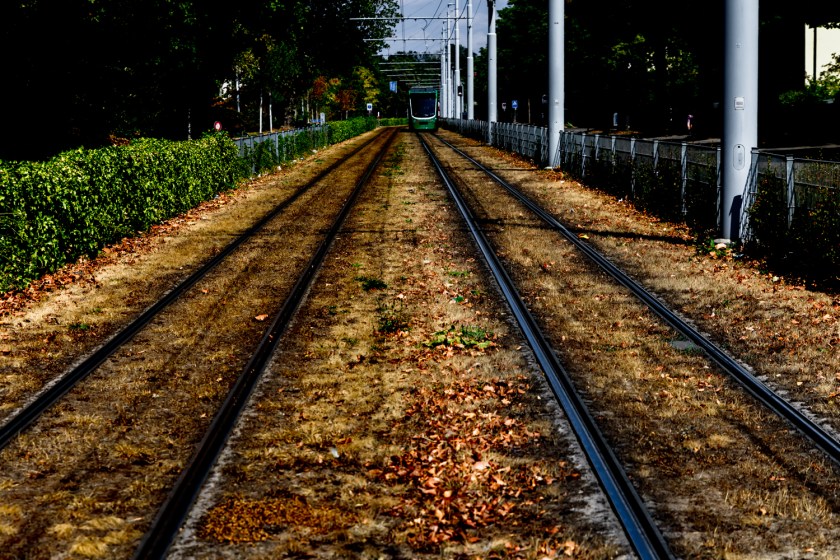
The city under pressure
On a day of extreme heat in Basel, people moved between exposed streets and pockets of shade, gathering around fountains for relief. Fallen leaves, appearing long before autumn, suggested another response to the conditions.
The photographs explore how heat alters the use and appearance of the city, from the movement of people to the unexpected signs of seasonal change.
A Fever in the Water
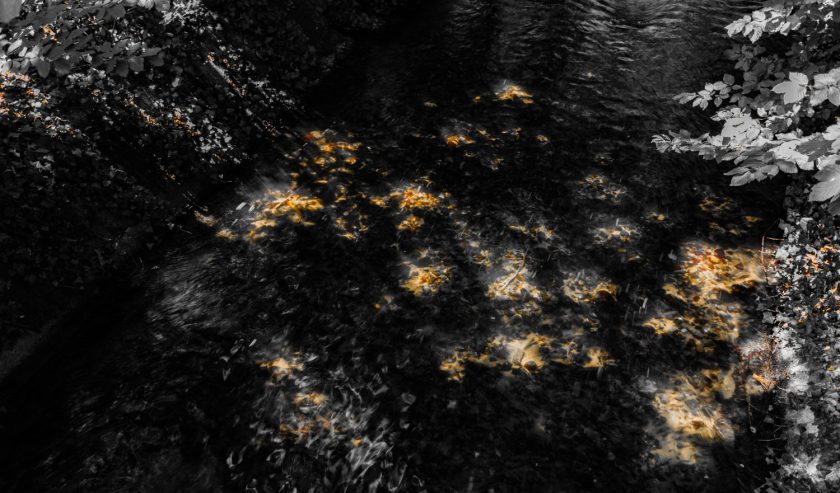
The Wiese during a heatwave
Along the Wiese near Basel, reduced flow and exposed riverbeds revealed a landscape under pressure. The photographs move away from the recognisable river towards dark, fragmented surfaces, where traces of amber and gold emerge from the water.
The series explores the uneasy sensation of seeing something familiar become unfamiliar, as the effects of heat are translated into colour, movement and texture.
What the Heat Spares
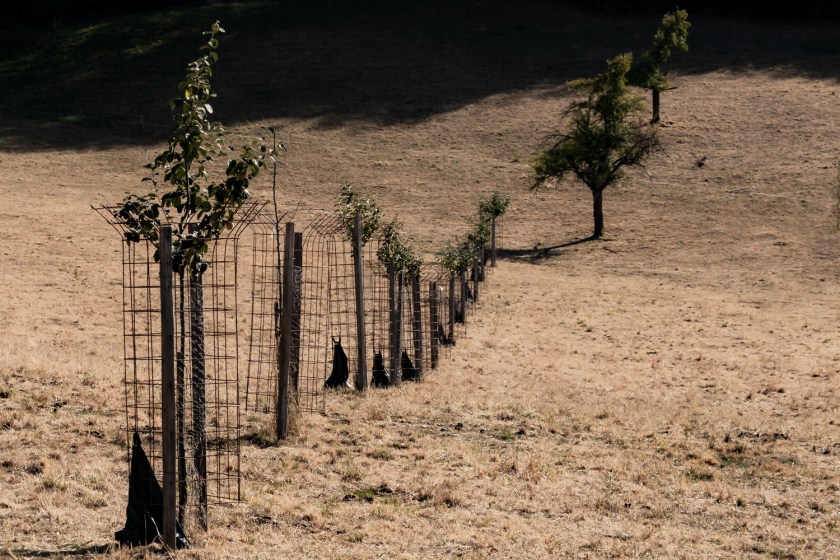
Persistence in a dried landscape
Beyond the city, harvested fields and parched ground carry the marks of prolonged heat. Furrows, tracks and exposed earth form an almost abstract landscape, interrupted by isolated trees and small patches of surviving vegetation.
What began as an observation of drought gradually became an examination of what remained, and the contrast between a landscape that had yielded to the heat and the forms of life that continued within it.

