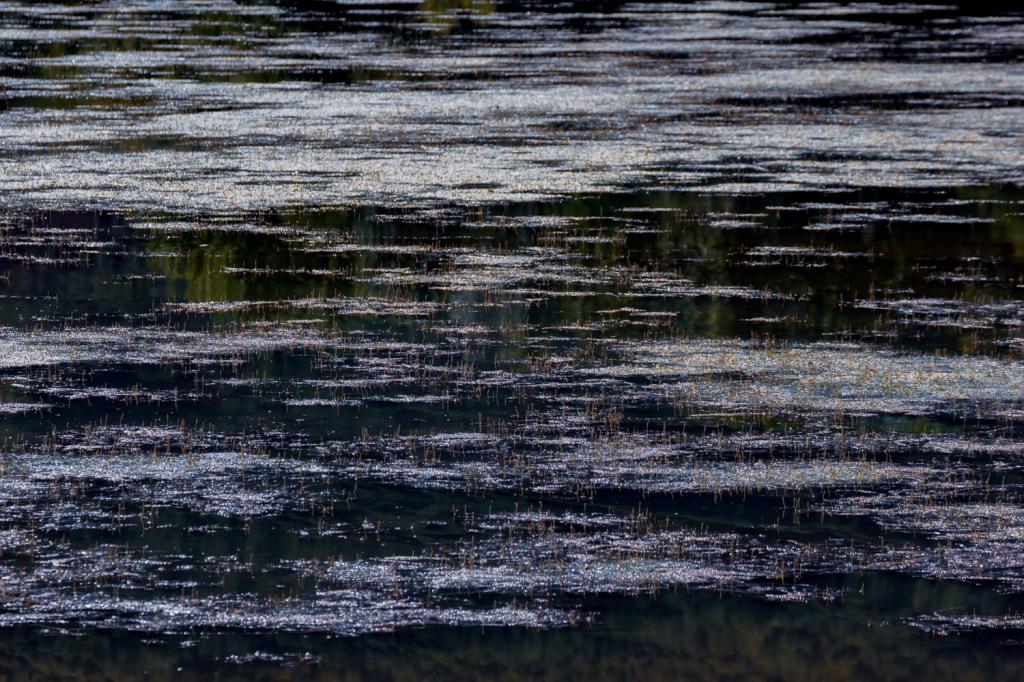
Transect

Akureyri to Reykjavik, 12 October 2026
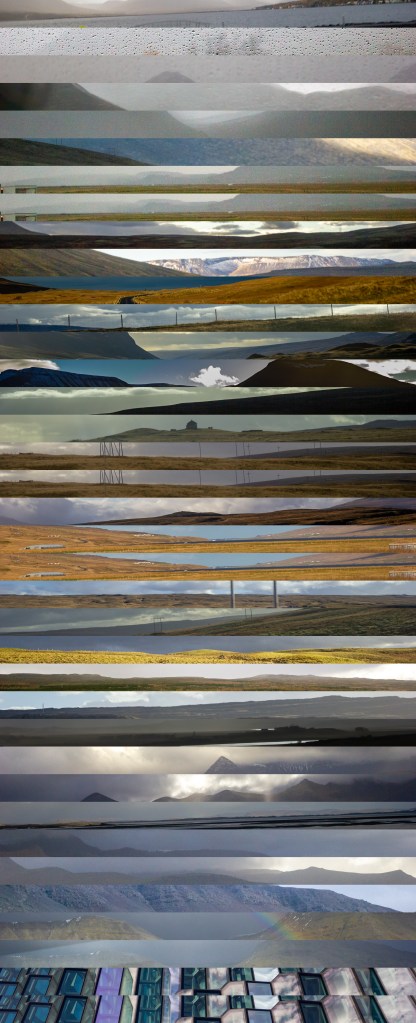
A tall stack of 37 thin horizontal landscape strips. From the top: a grey fjord, rain on glass, brown moorland with pylons and fences, snow capped mountains, dark ridges under heavy cloud, and at the bottom the glass facade of a building in Reykjavik.

Transect. 37 strips, one every ten minutes, 15:1 crops at the horizon. Akureyri to Reykjavik, 12 October 2026.

On 12 October 2026 I took the bus from Akureyri to Reykjavik, a journey of about six hours. I photographed through the window as we went. The weather changed faster than the road, the places we passed felt isolated, and a thin line of pylons, fences and farms followed us through the land.

Transect keeps one narrow strip from each frame, cut at the horizon, and stacks the strips in the order I took them. One strip stands for every ten minutes of the journey. Read from top to bottom, the land moves from fjord to moorland to mountain, and ends at the glass of Harpa in Reykjavik.

Where there is no clear horizon, I cut through the middle of the frame. Where I was not shooting, the nearest frame appears twice, so the spacing of time stays true. I left out frames taken at stops.
Surface Conditions

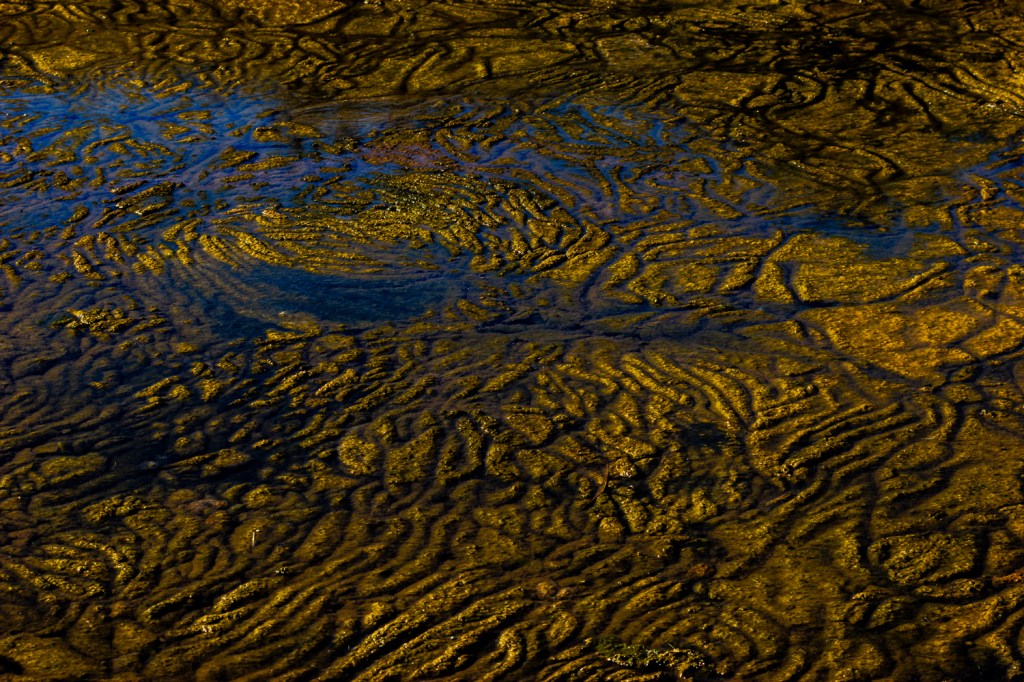
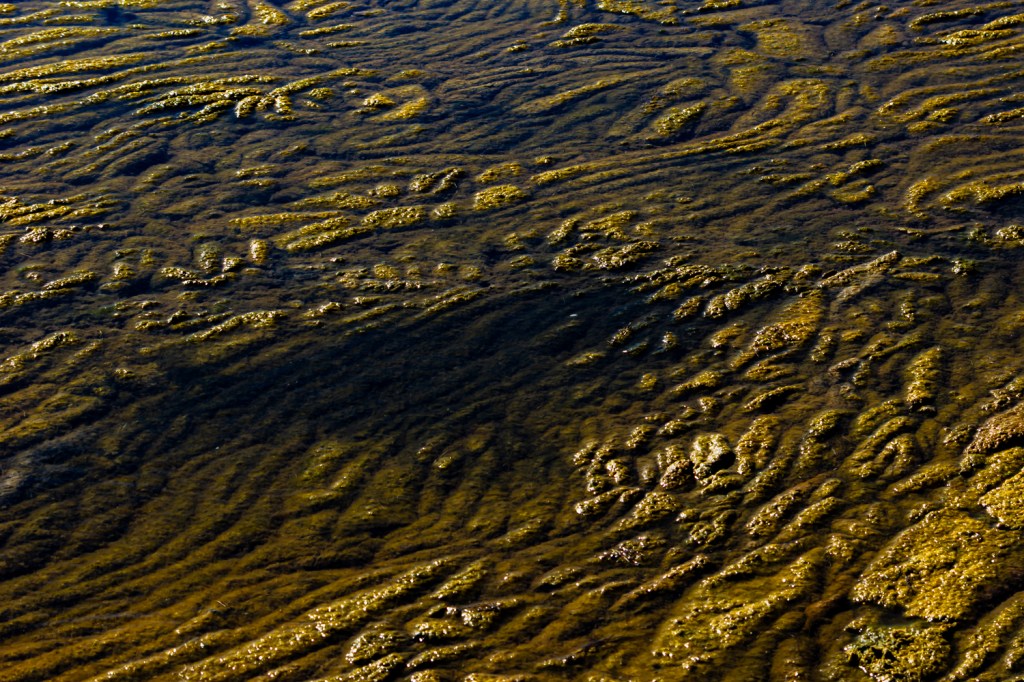
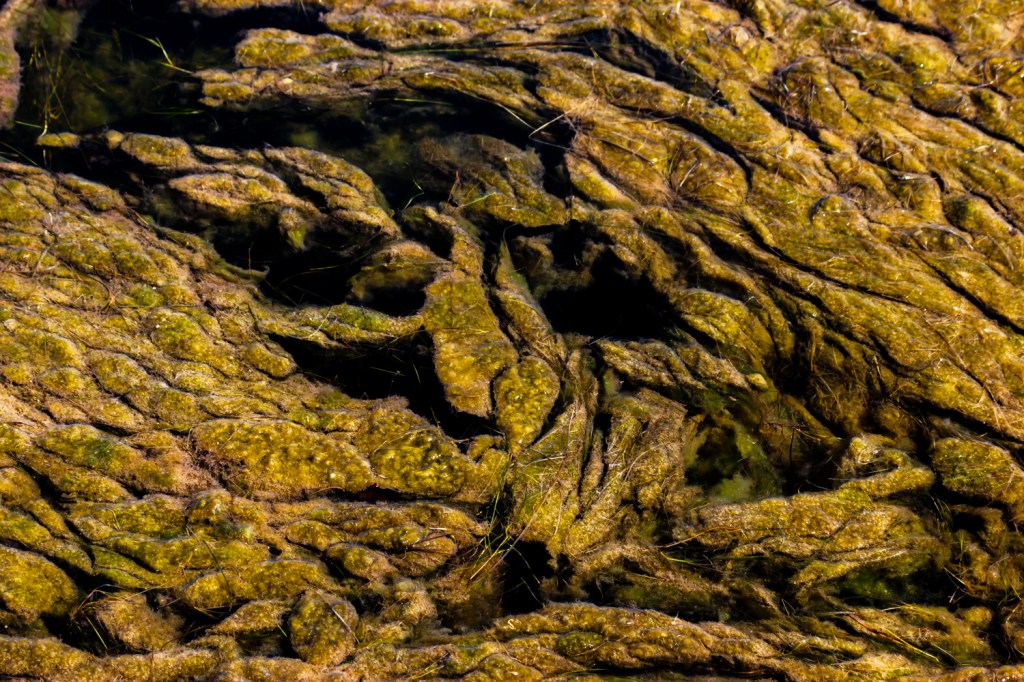
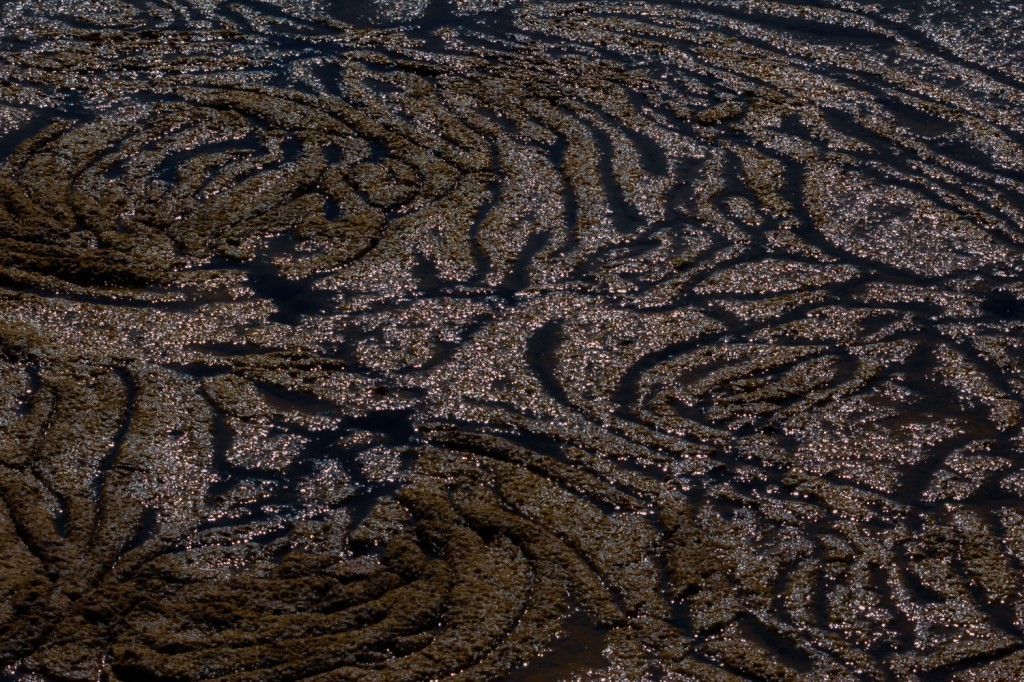
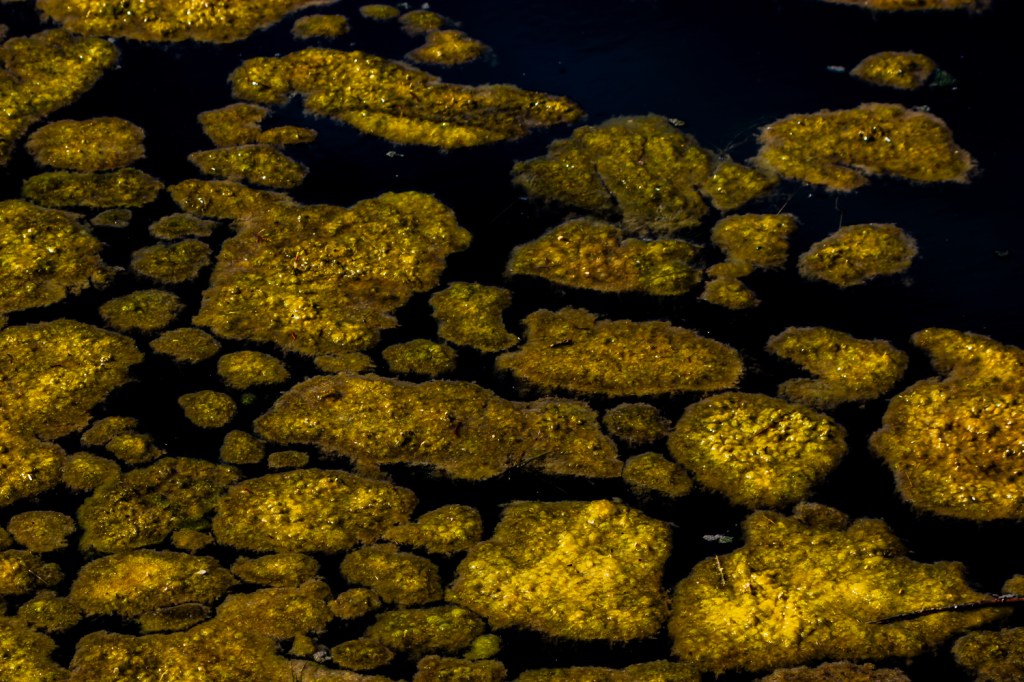
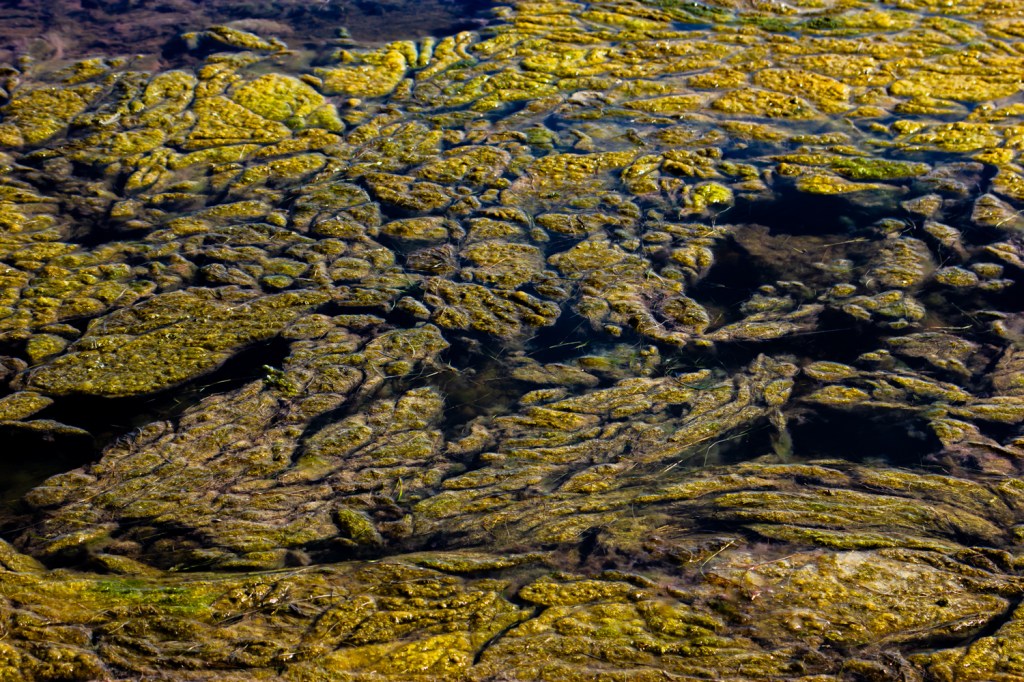
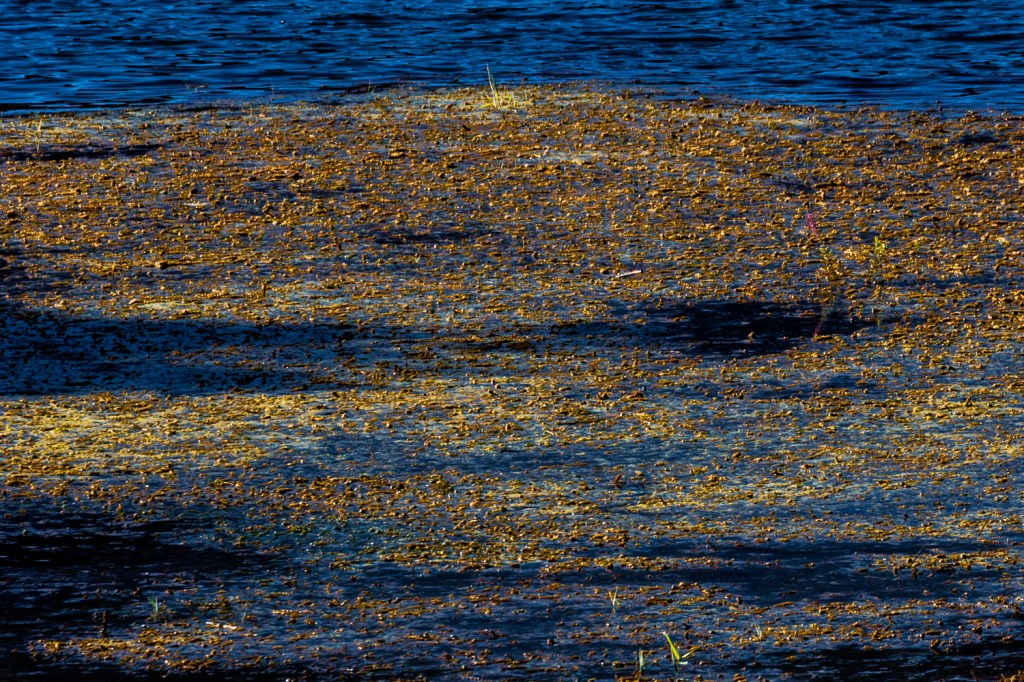
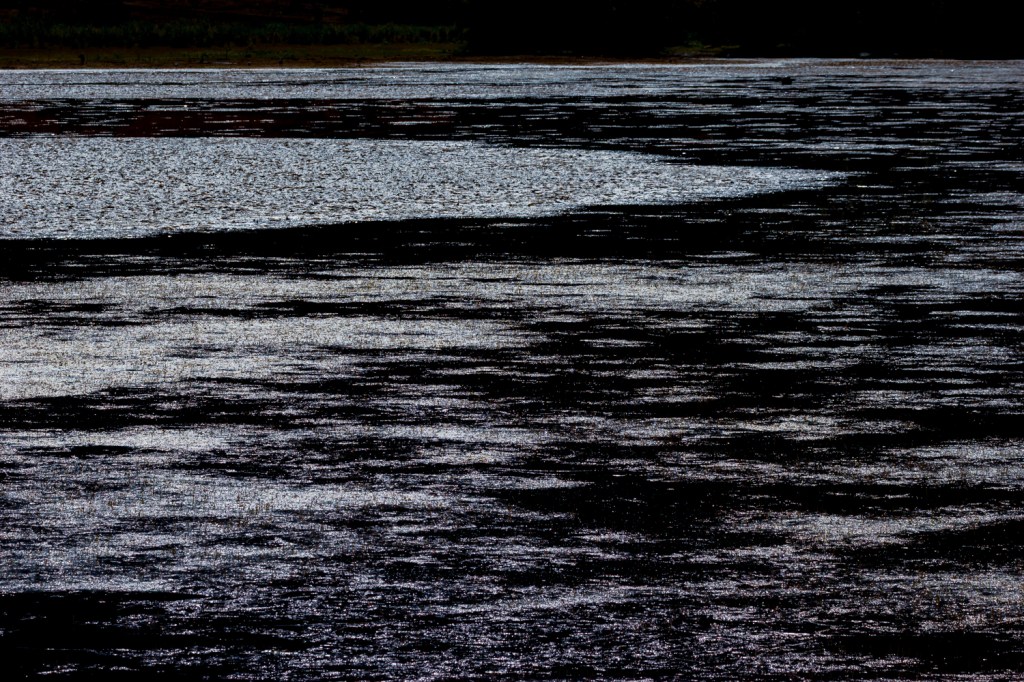
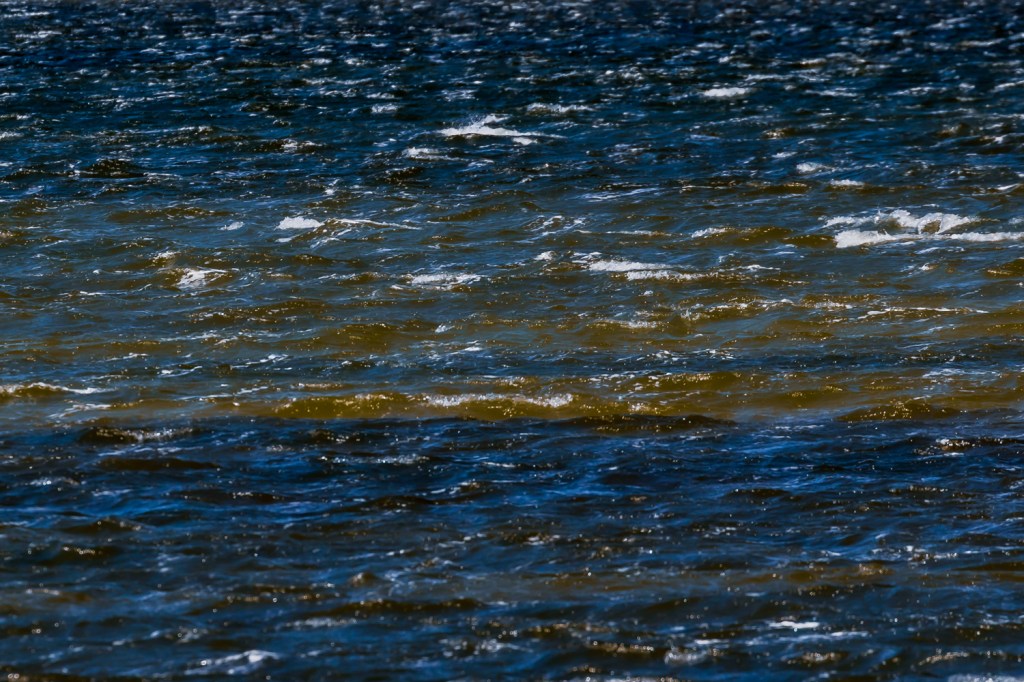
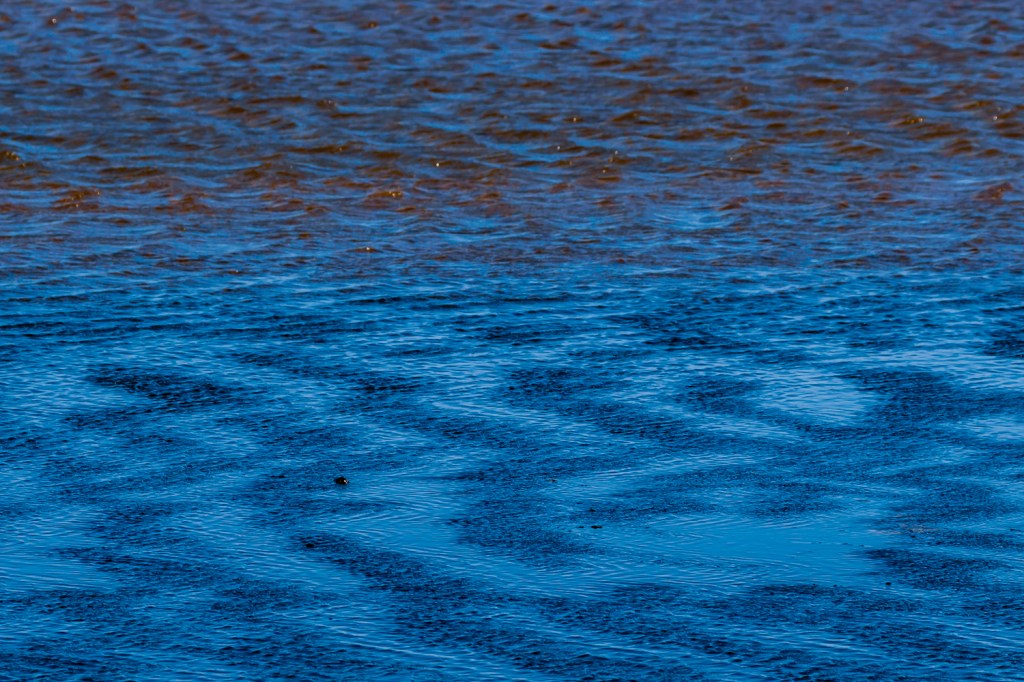
The étangs of southern France initially interested me as landscapes, but increasingly I found myself looking down rather than across them.

These photographs concentrate on the thin surface where water, light, suspended matter and reflection meet. By removing the horizon and other familiar indicators of distance, their scale becomes uncertain. Water can appear solid; reflection can acquire substance; patches of colour resemble skin, paint or matter whose identity is difficult to establish.

The sequence begins with surfaces that remain recognisably aquatic and moves progressively towards greater ambiguity. It is not intended to describe an ecological process or a particular sequence of events. Instead, I am interested in how little information photography needs before our confidence about what we are looking at begins to shift.

Surface Conditions considers the water’s surface not as a boundary to be looked through, but as a place where appearances are temporarily made and unmade.